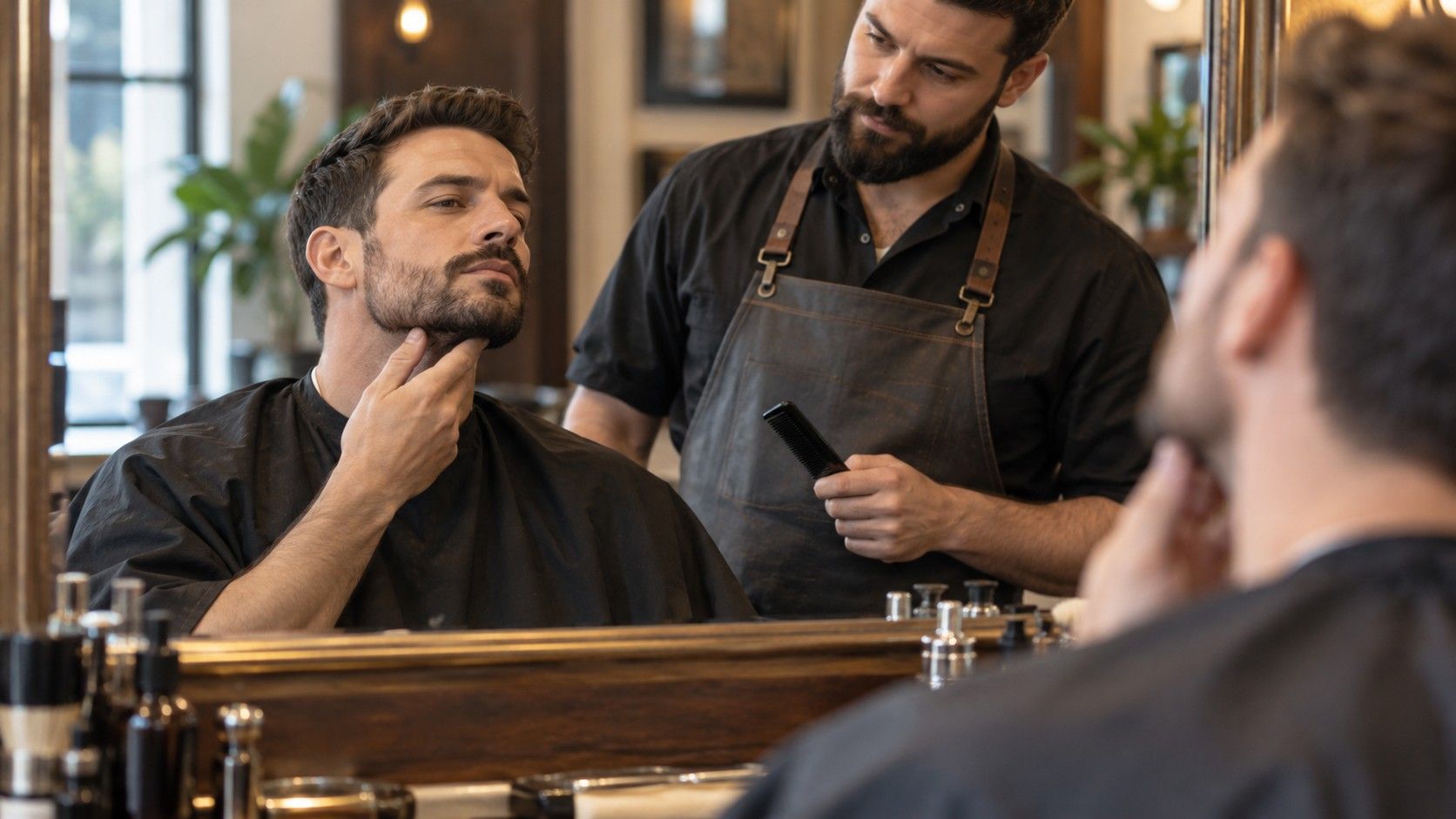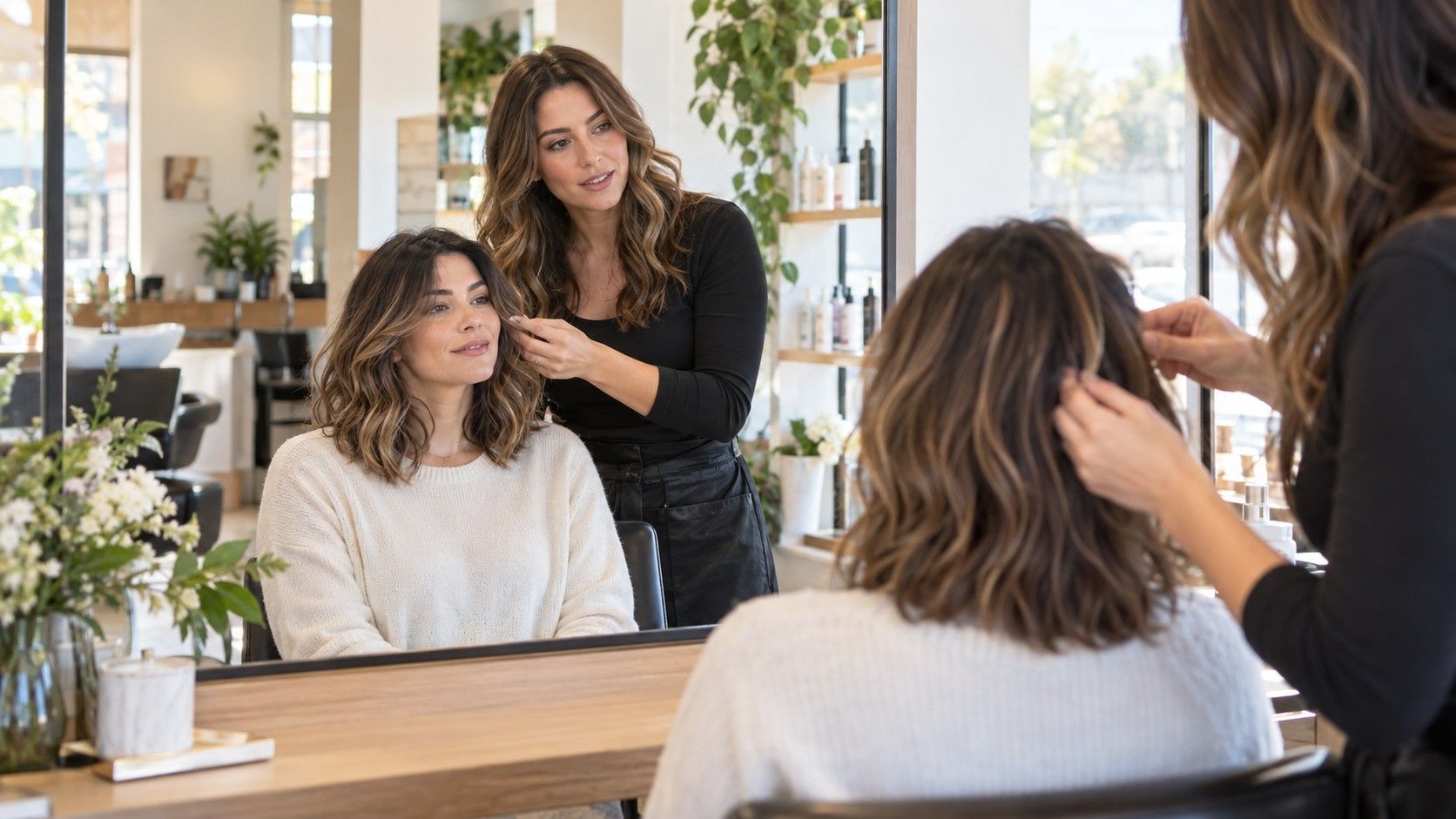
A haircut chart can tell you to add height, soften a jaw or cover a forehead before asking whether you want any of those things. I find it more useful to start with a specific wish: less bulk beside the cheeks, a fringe that stays out of the eyes, or a shape that works without daily heat styling. Face proportions can help describe the effect. Texture, density, growth patterns and the time you want to spend on your hair determine whether that effect is practical.
Decide what you want the silhouette to do
Look at a recent front photograph with your everyday hairstyle. Identify one change you would enjoy rather than listing features to correct. You might want more visible forehead, movement around the jaw or a shorter overall outline. “I want this area to look less heavy” gives you a question to discuss. “I have the wrong shape for short hair” closes the discussion before you have tried anything.
Separate visual preferences from everyday annoyances. Hair falling into your eyes, a heavy patch behind the ears and a crown that will not lie flat are concrete concerns. A haircut for face proportions can address the silhouette while still failing at those tasks. Make a short priority order: easy air-drying first, enough length to tie back second, and a particular outline third, for example.
There is no universal goal of making every face look oval. You may like a strong jaw and want a blunt edge that echoes it. You may enjoy a long, narrow silhouette and choose hair that repeats it. Shape language is useful when it names an intention. It becomes less helpful when a chart turns a personal preference into a prohibition.
Map length and width onto the hair outline
Compare the overall visible length of your face with its broadest area, using an upright, front-facing image. Then notice where the hair adds width: at the temples, cheekbones, jaw or shoulders. These are separate layers of the silhouette. A face can be relatively narrow while a wide fringe makes the upper outline feel broad. A full beard can change the lower outline again.
If you want more apparent height, test a little lift near the crown before committing to a cut. If you want less width beside the cheeks, tuck or pin back that area and take another photograph. The temporary version will not predict exactly how short hair behaves, but it helps identify which change you are responding to. Keep the camera distance and head position similar between images.
Where a cut ends can draw attention to that level. A strong horizontal edge near the jaw may emphasize it, while movement across several lengths creates a different impression. Neither is automatically better. Ask the stylist to show the proposed length while your head is upright, and explain how it may sit when dry. Do not tilt your head in the mirror and assume that altered view is the final shape.
Let texture and growth patterns set the practical limits
A reference image shows a finished surface, not the work behind it. Naturally straight hair, loose waves and tight curls can form very different outlines at the same stretched length. Curly hair may sit substantially shorter as it dries, with the amount varying across the head and from one routine to another. Discuss dry appearance rather than relying on a ruler measurement alone.
Density and strand thickness also influence the result. A fringe taken from a large section may leave the remaining sides feeling thinner; a heavy perimeter can create weight where you wanted movement. Conversely, extensive layering can remove the solid edge you liked in the reference. Ask what will be removed and where, and have the stylist explain the tradeoff in terms of your own hair.
Show your natural part, hairline and any persistent cowlick before the hair is restyled for the consultation. A fringe that looks controlled after a salon blow-dry may split at home along a growth pattern. That does not make a fringe impossible, but it changes the styling commitment. Be clear about whether you will use a dryer, a brush, styling products or simply leave the hair to dry.
Compare a fringe or layers with the upkeep included
A fringe changes how much forehead is visible and adds an edge across the upper face. Before cutting, try moving your existing front sections into a rough curtain shape or use a realistic reference with a similar hairline. Temporary pinning can suggest the visual effect, although it cannot reproduce the weight or spring of shorter strands. Ask how often the proposed fringe would need trimming to stay where you want it.
Layers can redistribute volume, but the word is too broad to specify a result. Short crown layers, long face-framing pieces and internal weight removal do different jobs. Point to the exact area you want to change. If you tie your hair back for work or exercise, check which pieces will remain loose. A cut can look right when worn down and still fail a daily requirement.
| Possible change | What to discuss | What to test at home |
|---|---|---|
| Fringe | Growth pattern, dry length and trim frequency | Whether you like less visible forehead |
| Face-framing pieces | Shortest point and tie-back needs | Where you prefer movement around the face |
| Shorter sides | Volume after drying and grow-out shape | Whether less side width gives the effect you want |
| More crown height | Natural lift and styling effort | Whether extra height suits your preferred silhouette |
Ask about the ordinary morning version, not just the appointment-day finish. A cut that needs ten minutes of deliberate styling may be reasonable if you enjoy that routine. If you want to wash and leave, say so before the plan is settled. The best choice is the one whose upkeep fits your life as well as its front view fits your preferences.
Bring references that explain a choice
Bring two or three images with a clear purpose for each. One might show the length, another the fringe and a third the amount of movement. Point out what you dislike as well. A celebrity photograph with a similar face-shape label may be less useful than an ordinary image with hair texture and density closer to yours. Styling, extensions and camera angle can conceal large differences.
Include a photograph of your own hair on a normal day, especially if you arrive with it tied back or freshly styled. Show where it becomes bulky, separates or springs upward. Explain what you did to achieve that everyday result. A stylist can give a more useful answer to “This is how it dries with no brush” than to “It is usually difficult.”
When discussing haircuts for face shape, translate the label into visible details. Say that the cheekbones are the broadest point, the lower face tapers, or the forehead is usually covered. A calculator result can be a conversation starter, but no precise shape boundary is needed for a haircut. If you are between two categories, describe both relevant features and keep the decision focused on the hair.
Agree on the first cut and the grow-out plan
Before the scissors start, confirm the shortest length and the main change in outline. Ask to see where the front pieces and perimeter will fall. Wet hair, curled hair and hair under tension can give a misleading impression of the finished length, so make sure you are discussing how it will sit when worn normally. If the change feels large, ask whether a smaller first step can test the direction.
Discuss grow-out as part of the choice. A cropped side, precise fringe or strongly shaped bob may need regular appointments to preserve its silhouette. Longer layers can still need maintenance, but the visible effect changes differently over time. Ask which area will lose its shape first and what you can do between visits. Do not assume that a shorter cut is automatically less work.
At the end, ask for a simple demonstration you can repeat: where to direct the dryer, how much product to start with or how to place the part. Photograph the finished cut from the front and side if you want a record, then assess it after your own wash and styling routine. One salon finish does not tell you how the cut behaves every day.
If something is not working, describe the specific behavior when you return: the fringe splits, the sides widen after drying, or the front pieces escape a ponytail. That evidence supports a more precise adjustment than changing your face-shape label. A useful haircut makes sense of your proportions while respecting your hair and your schedule. It does not need to obey a diagram to feel right.