Round and oval faces can share full cheeks, a curved jaw and a softly rounded chin. The useful difference is usually how those curves sit within the overall length and width of the face. If you are weighing round vs oval face descriptions, begin with a consistent front view and a few repeatable measurements. Then look at the outline. A shape name can help explain what you see, but it should not overrule an unclear hairline, a distorted selfie or the way a pair of glasses actually fits.
Compare length and cheek width using the same landmarks
Move hair away from your forehead and look straight ahead with a relaxed expression. For a common front-view measurement, record the distance from the centre of the hairline to the lowest point of the chin. Then record the width across the cheekbone area using matching points on each side. Keep the method consistent: a straight distance in a photograph and a tape following the curve of the skin describe different things.
Broadly, an oval description suggests a face that reads as longer than wide, with a gentle narrowing toward the chin. A round description suggests less apparent difference between length and width, alongside a curved outer contour. These are descriptive tendencies. There is no single ratio that reliably settles every person's shape, and calculators may draw their category boundaries in different places. Treat a numerical result as a prompt to inspect the outline.
Repeat both measurements before interpreting them. A small movement at the hairline or a cheek landmark can alter the comparison enough to switch a close result. Rather than rounding numbers to force a category, keep a short range of plausible values. If the distinction disappears within that range, your measurements support an overlapping description. You have learned something useful even if the label remains undecided.
A receding, irregular or hidden hairline adds another complication. Mark the boundary you actually used and avoid comparing your result with a chart that measures from a different starting point. If the upper boundary cannot be located consistently, concentrate on cheek width, visible face length and taper. Guessing the missing section with false precision will not improve the styling decision.
Follow the outline from the cheeks to the chin
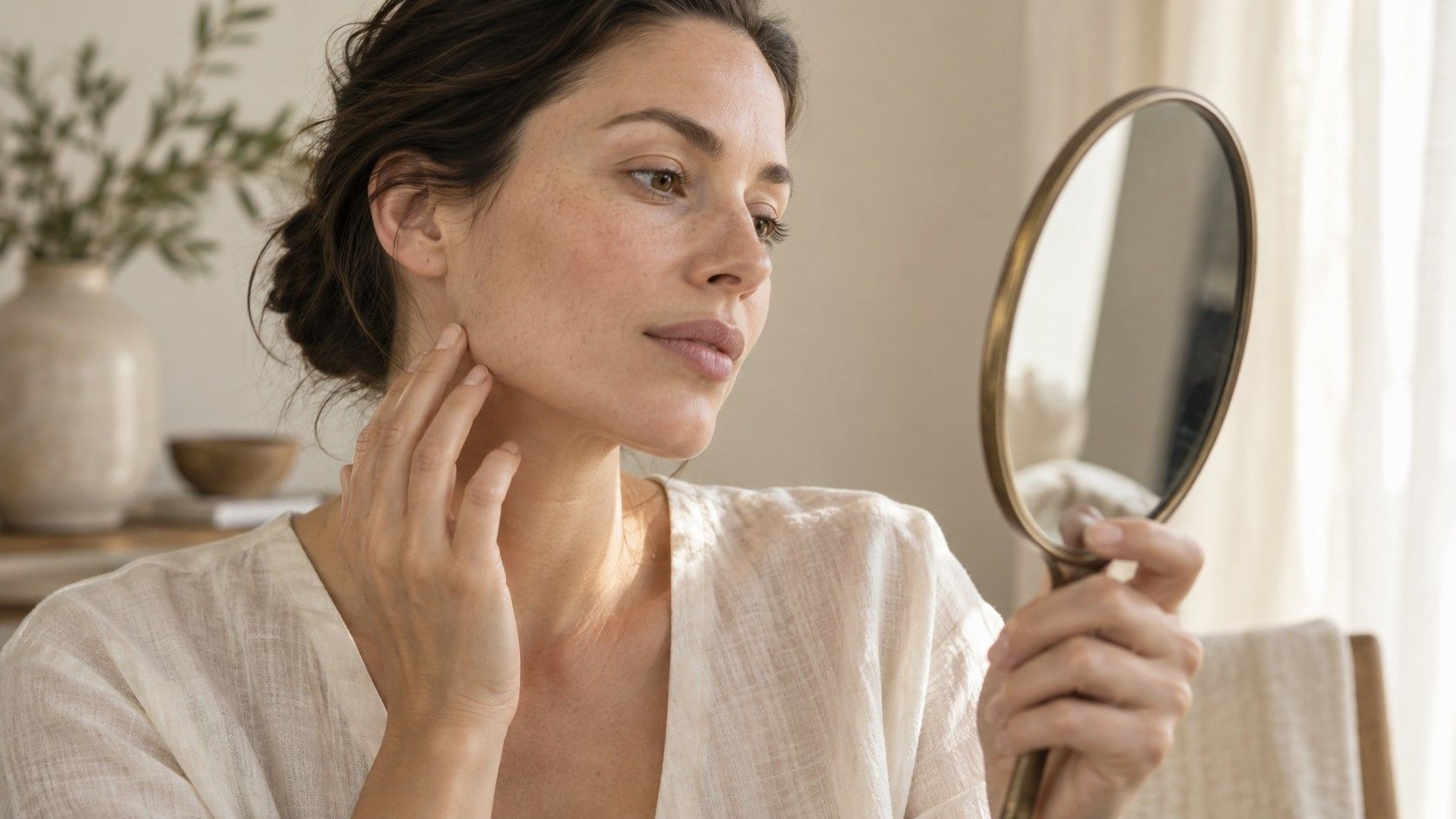
After measuring, look at the face as a continuous outline. Find the widest visible area and follow each side downward. Does the contour stay relatively full through the lower cheek, or does it narrow gradually toward the jaw and chin? A round-looking face often retains a broad, curved impression through the cheeks. An oval-looking face often has a longer sweep before reaching the rounded chin. Neither observation needs perfectly symmetrical sides.
Notice the jaw separately from the cheek fullness. Soft tissue can make cheeks look rounded even when the underlying lower contour narrows. Conversely, a gently curved jaw does not by itself make the whole face round. In a mirror, I would look for the relationship among forehead, cheek area and lower face instead of staring at a single chin curve. A faint jaw corner may be visible without being the main feature of the outline.
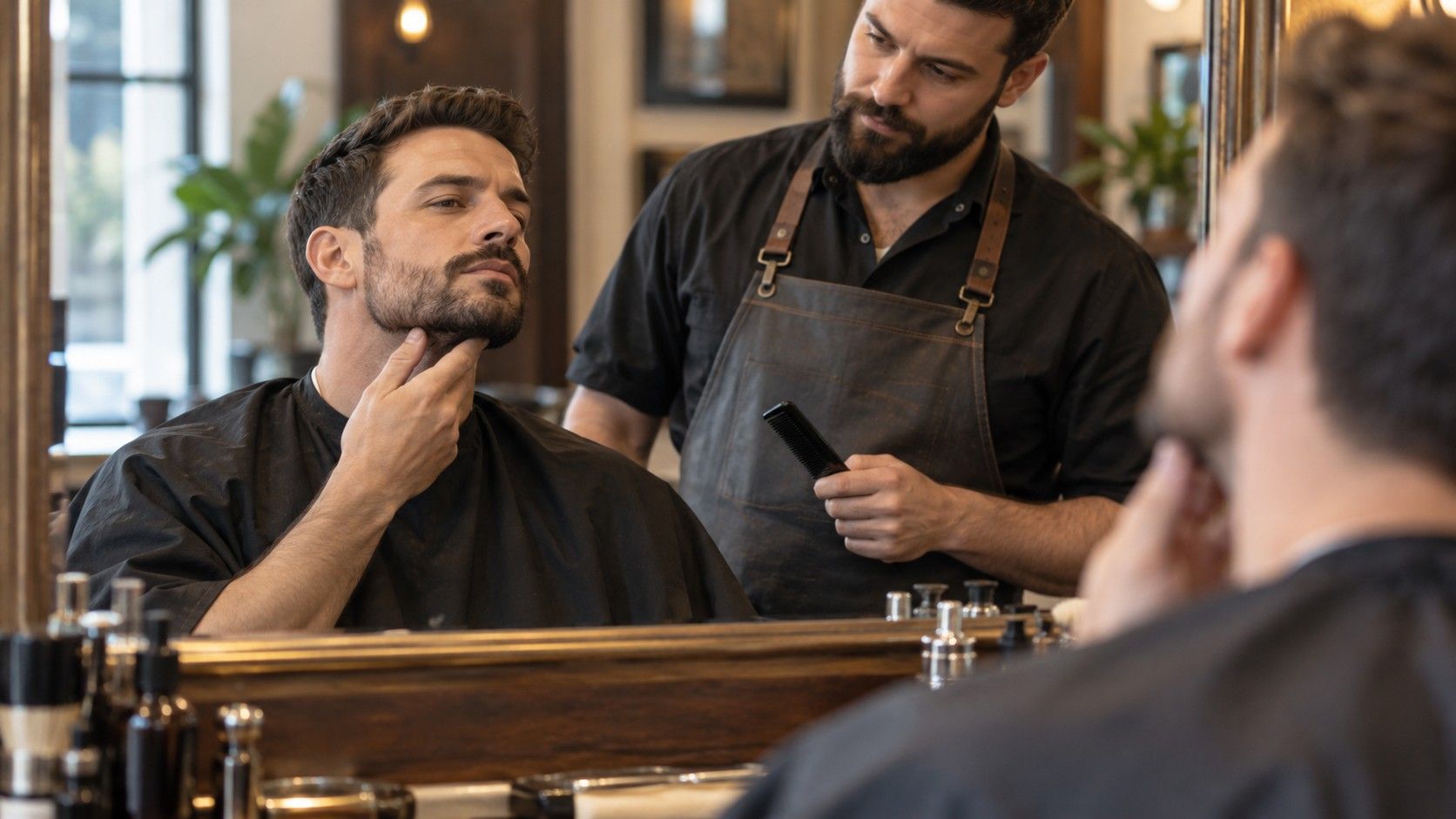
Use light that lets you see both sides. Strong side lighting can carve a sharp-looking jaw edge into one half of the photograph; bright frontal light can flatten the same feature. If you wear a beard, distinguish the grooming outline from the face underneath. You may still want to style around the beard's visible silhouette, but it should not silently become evidence for a different underlying face shape.
A softly curved jaw can occur in either outline. If the length comparison is close, the shared features matter more than forcing a sharp division between round and oval.
Remove hair and camera effects from the comparison
A hairstyle changes the silhouette you notice first. Volume at the crown can make the whole head look longer, while a fringe hides part of the forehead and shortens the visible face. Wide curls at cheek level may add a rounded impression without changing any facial measurement. For the comparison photo, pull the hair back gently. For a styling decision, put it back as you normally wear it and compare again.
Camera position deserves the same attention. A close phone selfie exaggerates parts nearer the lens relative to the outer face. Holding the phone high or tilting the chin also changes the projected outline. Place the camera around face height, move back and crop the frame later. Use a timer so reaching for the shutter does not pull your head forward. Keep beauty filters and face reshaping settings off.
Take another picture after stepping away and resetting your position. If the second one suggests a noticeably different length or cheek width, the setup needs attention before the face needs a new label. Compare both with an ordinary mirror view at a comfortable distance. You are looking for recurring features across views, rather than choosing whichever photograph delivers the category you expected.
Work through a result that sits between round and oval
Suppose the face appears moderately longer than wide, yet the cheeks remain full and the jaw is smoothly curved. One tool calls it oval and another calls it round. There is no need to average their confidence scores or keep retaking pictures until they agree. Check whether they use the same hairline and cheek landmarks. Then record the features they are trying to summarize: noticeable length, broad cheeks and a soft lower contour.
This is where oval or round face measurements are most helpful as notes rather than a verdict. Write down which dimension is clearly different and which is uncertain. You might be confident that the cheeks form the widest area but unsure about the hairline boundary. Bring that description to a glasses fitting or haircut consultation. It gives the other person a concrete feature to work with instead of an argument over terminology.
A useful stopping point is when a second careful measurement supports the same general proportions and further adjustments only move the result slightly. Keep the reference photo and your landmark definitions if you want to compare later. Everyday changes in expression, hair and camera position can alter appearance; they do not automatically mean the face has changed category. Repeated measuring is unlikely to settle a distinction that the categories themselves leave open.
Use the distinction to test a styling choice
For glasses, decide what you want the frame to emphasize. A more angular outline can add contrast to curved cheeks, while a rounded frame can echo them. A deeper frame may occupy more vertical space on a longer-looking face. These are visual options, not rules about what a round or oval face is allowed to wear. Try the frames with your usual hair and compare front and three-quarter views.
Fit comes before the shape label. Check that the bridge stays comfortable, the temples do not squeeze and the frame does not rest heavily on your cheeks when you smile. A frame chosen from an oval-face list can still fit badly. Take a neutral photo and a smiling one in the same light to judge both the outline and its everyday movement. If two frames feel equally comfortable, personal preference is a sound reason to choose one.
For hair, ask whether you want more apparent height, more side width or a clearer view of your face. Crown volume and less bulk around the cheeks can create a longer impression; side volume or a fringe can change that balance. Hair texture, growth patterns and the time you spend styling matter as much as the face outline. Show a stylist the length and cheek area you want to emphasize, plus an example of a finish you can maintain.
You can also keep the existing proportions visible. Full cheeks do not need disguising, and a longer face does not need visually shortening. The comparison earns its place when it helps you test a specific choice: a softer frame, a different fringe, less volume beside the cheeks. Make one change, look at it in ordinary conditions and keep what feels right. Your own response to the result carries more weight than a category name.