A face can look almost as wide as it is long and still leave you undecided between square and round. The measurements overlap because those names describe an outline, not a precise set of dimensions. I find the useful question is where that outline changes direction: does the lower face turn a corner beside the jaw, or curve gradually toward the chin? A careful photograph and a second look at the sides of the face usually tell you more than another calculator result.
When length and width give you the same answer
Start with a front-facing image taken with your head upright, your expression relaxed and your hair away from the sides. Measure face length from the middle of the visible hairline to the bottom of the chin. Then compare it with the widest cheekbone span. Keep these as straight distances in the same image. A flexible tape wrapped across the cheeks follows a different path and cannot be compared directly with a flat photograph measurement.
Both square and round descriptions often involve a face that appears relatively broad for its length. That observation is a starting point, not a decision. A square outline can be slightly longer than it is wide; a round outline need not form a circle. Avoid deciding that a tiny difference between two numbers settles the matter. Moving the hairline mark or cheek point by a little can change the result, especially in a small image.
I would write down the actual observation before choosing a label: “Cheekbones and lower face look similarly wide; face length is a little greater.” That sentence remains useful when you try glasses or discuss a haircut. “Square” alone leaves out which feature you want to emphasize. If one side of the face measures differently from the other, keep the head centered and repeat the check rather than trying to force symmetry.
Follow the jaw turn, not just the chin
Look at the outline from the ear area down toward the chin. In a square-looking face, the lower sides often stay comparatively straight before making a more noticeable change in direction near the jaw corners. The chin itself may be broad, rounded or gently flattened. A pointed or narrow-looking chin does not automatically erase a strong jaw corner, just as a broad chin does not prove the entire face is square.
A round-looking outline usually has a smoother transition from the cheeks into the jaw and chin. There may be no obvious corner to point to in a front view. Yet “smooth” is relative: light from one side can create a dark edge that resembles an angle. Compare the two sides under even light. If the apparent corner exists only in a shadow, it is weak evidence for a shape label.
Try tracing the outer edge on a duplicate photograph with a plain line. Leave eyebrows, lips and nose out of the drawing. The point is to see the overall change in direction without getting distracted by features inside it. Do not draw through a beard or invent the outline beneath hair. If the jaw boundary is hidden, record it as uncertain and use a clearer view when one is available.
Separate a full cheek from a curved outline
Full cheeks and a strong jaw can occur together. This is why a relaxed portrait may look round while a side-lit photograph looks square. Cheek fullness describes volume inside and around the outline; the square-versus-round comparison asks how the visible outer boundary behaves. Neither description reveals a person's health, fitness or age, and none of those judgments is needed for choosing a frame or haircut.
A smile changes the cheek area and may make the lower face appear shorter or broader. Take the measurement image with a neutral expression, then keep a smiling image for checking how glasses sit during normal use. Those photographs answer different questions. Comparing a laughing close-up with a solemn portrait taken farther away often creates a disagreement that comes from the images rather than your proportions.
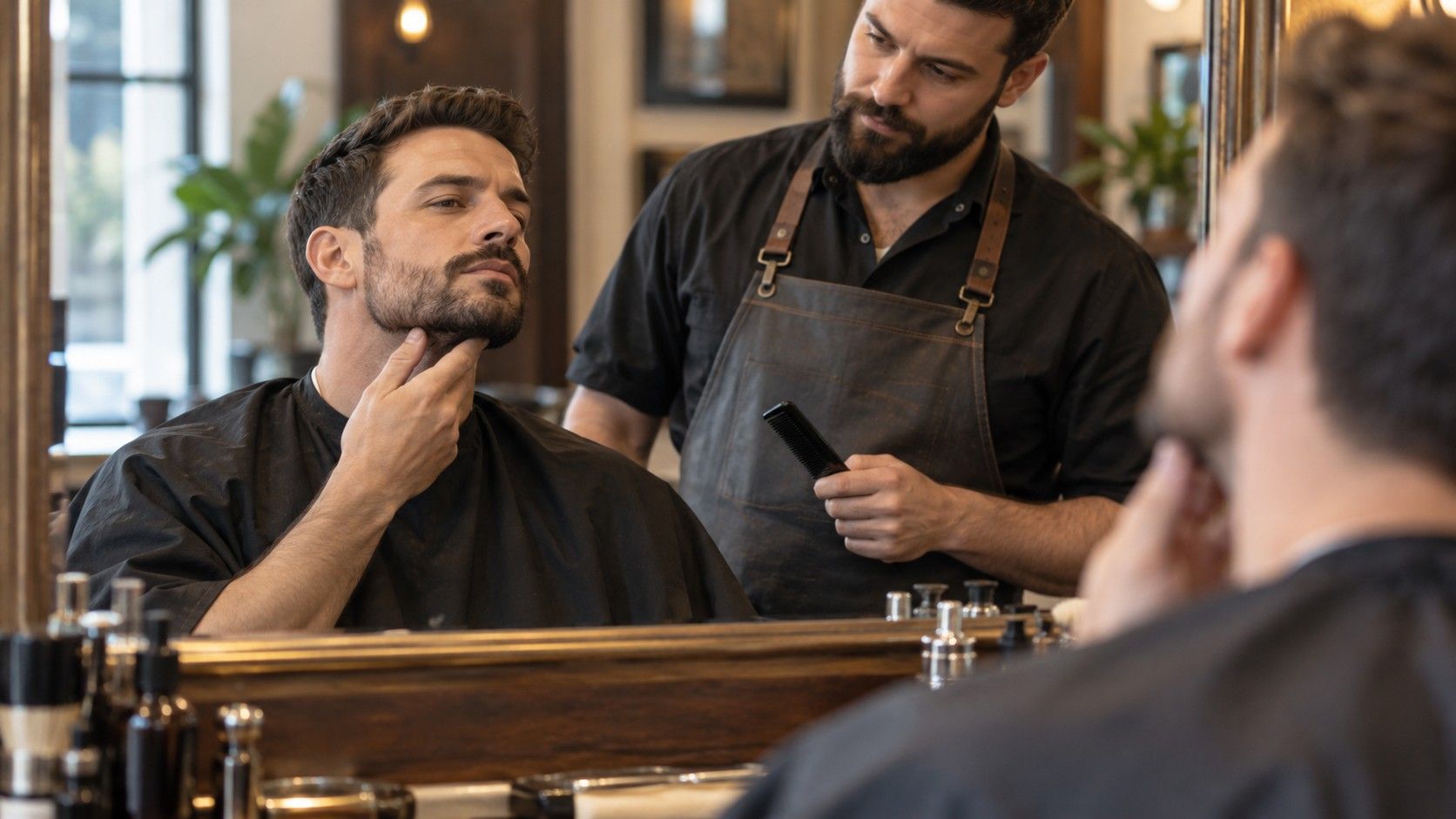
Beards deserve a separate check. A dense, squared-off beard can create straight sides and corners that the visible skin does not have. Rounded trimming can soften the outline of an angular jaw. You can describe the present appearance as square or round for styling purposes while acknowledging that the grooming is part of it. There is little value in guessing a hidden anatomical shape when the decision concerns how you look today.
Use a second photograph to test the impression
A close phone selfie is a poor referee when two shapes seem equally plausible. Perspective changes with camera distance, and the parts nearer the camera appear relatively larger. Put the camera farther away, at roughly face height, and use a timer or ask someone to take the photograph. Crop afterward if needed. Keep the face near the middle of the image and avoid an extreme wide-angle setting.
Repeat the view with the same head position rather than taking ten different angles. A raised chin changes the visible jaw boundary; a lowered chin can conceal it. Turning slightly to one side makes one cheek appear wider. A mirror is useful for checking that your posture feels neutral, but a still image makes it easier to place the same marks twice. There is no need to chase a perfectly symmetrical portrait.
| What you notice | What to check next | What it can tell you |
|---|---|---|
| Similar length and width | Trace both lower sides | Proportions alone leave both descriptions possible |
| A distinct jaw corner on both sides | Repeat under even light | A square description may be more useful |
| A continuous curve toward the chin | Check a neutral expression | A round description may fit the visible outline |
| Different results in each photograph | Match distance and head position | The image setup may explain the difference |
If the second image supports the same description, you have a reasonable working label. If it does not, keep “between round and square.” A calculator may still require one option, but your wardrobe does not. Borderline results are common enough that forcing an exact category usually adds confidence without adding information.
Try glasses against the features you can see
Shape advice often pairs round faces with angular glasses and square faces with curved glasses. Use that as a contrast experiment. Put on a softly rectangular frame and a more rounded frame of similar overall width. Compare them with your eyebrows visible and your head level. Changing size, color and shape at the same time makes it difficult to tell which feature improved the result.
On a curved outline, a defined upper rim can add a line you enjoy. On a strong jaw, rounder corners can repeat the curves of other features or reduce the amount of angular detail. You may prefer the opposite: angular frames can reinforce a square jaw deliberately. The aim is a visual effect you like, not correction of a supposed defect. Check photographs in ordinary light rather than relying solely on the shop mirror.
Fit comes first. The bridge should feel secure, temples should avoid uncomfortable pressure, and the frame should sit well when you smile. A flattering geometric shape is still a poor purchase if it slides or presses against the cheeks. Use the square vs round face comparison to narrow a tray of frames, then let comfort, proportion and your own reaction settle the choice.
Discuss a haircut or beard in concrete terms
At a haircut appointment, explain what you want the outline to do. “Less width beside the cheeks” is clearer than “a haircut for a round face.” “Keep some softness around the jaw” tells a stylist more than a square-face label. Bring a photograph showing both the result you like and enough of the person's hair texture to make the reference meaningful. Density, curl and growth patterns affect what a cut can achieve.
For a broad, curved outline, you might test a little height at the crown or less volume directly beside the cheeks. For a pronounced jaw, you might try movement near the sides instead of a severe, closely clipped silhouette. These are optional styling choices. Very short hair, a wide fringe or a precise blunt cut can look intentional on either shape when that is the effect you want.
With facial hair, compare the outline before making a large change. Extra length at the chin changes the balance differently from extra bulk at the jaw corners. Ask for a modest adjustment first and look at a front view afterward. Your useful result is a description such as “broad face, soft cheeks, visible jaw turns,” followed by a styling choice that suits it. The category can remain a little untidy.